.png)
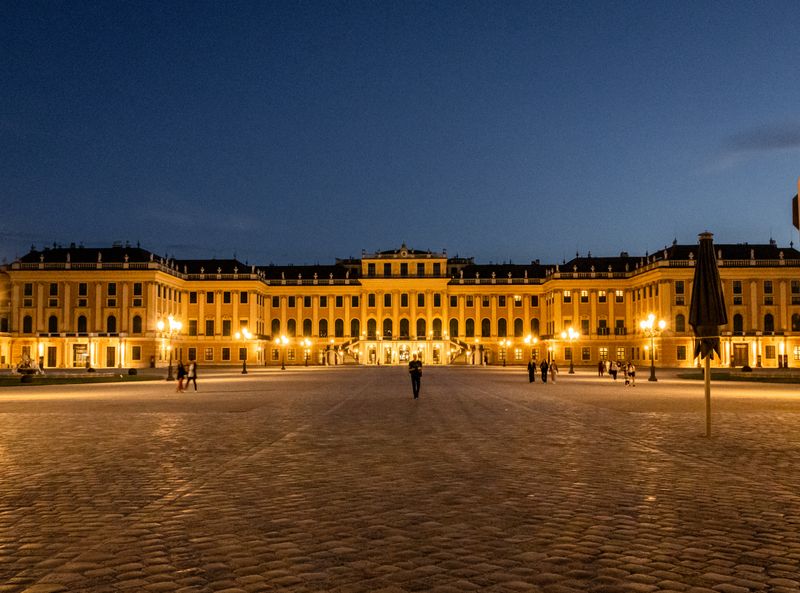
Vienna is one of the great imperial capitals of Europe — a city whose extraordinary legacy of art, music, architecture, and intellectual life is preserved with a care and self-assurance that few other capitals can match. The Habsburg dynasty built this city as the centerpiece of an empire that stretched across a continent, and the result is an urban landscape of staggering grandeur: the Ringstraße boulevard lined with monumental museums and palaces, the Naschmarkt overflowing with European and Middle Eastern produce, the colossal Schönbrunn and Belvedere palace complexes, and the legendary coffeehouses where Freud, Mahler, and Klimt once debated ideas that changed the world. For classical music lovers, Vienna is a pilgrimage destination. For everyone else, it is simply one of the most beautiful, intellectually rich, and gastronomically rewarding cities in Europe.
Imperial Palaces and Habsburg History
The Schönbrunn Palace complex — the former summer residence of the Habsburg emperors — is Vienna's most visited landmark and one of the finest examples of Baroque palace architecture in Europe. The palace's 1,441 rooms, only 40 of which are open to visitors, are filled with imperial furnishings, portraits, and personal objects that bring the Habsburg story vividly to life. The palace gardens, extending 1.2 square kilometres and culminating in the Gloriette monument at the hilltop, offer the finest panoramic view over Vienna. The Hofburg Palace, the Habsburg winter residence in the heart of the first district, houses the Imperial Apartments, the Imperial Silver Collection, the Sisi Museum, and the celebrated Spanish Riding School. Together, these imperial complexes represent an immersion in European history that is unrivalled anywhere on the continent.
Classical Music and the Vienna Philharmonic
Vienna's claim to be the world capital of classical music rests on a legacy that includes Mozart, Beethoven, Schubert, Brahms, Johann Strauss, and Mahler — all of whom composed, performed, or spent significant periods in the city. The Vienna State Opera, one of the world's great opera houses, performs nearly every night of the year. Standing room tickets (Stehplätze) can be purchased for around €3–€10 and provide an extraordinary introduction to world-class opera at a fraction of the seated ticket price. The Musikverein concert hall — home of the Vienna Philharmonic and site of the globally televised New Year's Concert — offers similarly affordable standing tickets for many performances. Visiting one of Vienna's classical concerts is among the most memorable and unexpectedly affordable cultural experiences available to last-minute travelers.
Art Nouveau and the Secession Movement
Vienna's fin-de-siècle cultural explosion produced one of the most distinctive artistic movements in European history. The Vienna Secession — led by Gustav Klimt, Egon Schiele, and Oskar Kokoschka — created a body of work that continues to define the city's cultural identity. The Secession building itself, topped by its famous golden laurel dome, is a monument to the movement. The Belvedere Palace houses the world's largest collection of Klimt paintings, including The Kiss — arguably the most famous painting produced in the 20th century's first decade. The Leopold Museum in the MuseumsQuartier holds the world's largest Egon Schiele collection. For visitors interested in the history of art, Vienna's combination of Habsburg grandeur and Secession innovation creates an experience unavailable anywhere else.
Coffeehouse Culture and Viennese Cuisine
The Viennese coffeehouse is a UNESCO-protected institution — a distinctly Viennese invention that differs fundamentally from the Italian espresso bar or the American café chain. In a Viennese Kaffeehaus, a single Melange (Vienna's answer to the cappuccino) entitles the customer to stay as long as they wish, reading newspapers provided by the house on wooden rods, watching the street, or simply thinking. Café Central — occupying a vaulted neo-Gothic hall in a former palace — is Vienna's most celebrated coffeehouse and remains genuinely extraordinary. Viennese cuisine — Wiener Schnitzel (breaded veal cutlet), Tafelspitz (boiled beef), Gulasch (Hungarian-influenced paprika beef stew), and the legendary Sachertorte (dense chocolate cake with apricot jam) — is one of Europe's most underrated culinary traditions and available at every price point from market stalls to historic restaurants.
Popular Routes to Vienna
Airlines Flying to Vienna
Best Time to Book Flights to Vienna
Best Months
April – May, September – October
Peak Season
June – August, December
Budget Season
January – March
Travel Tips for Vienna
Nearest Airport
Vienna International Airport (VIE)
Transportation
Vienna's U-Bahn (5 subway lines), trams, and night buses form one of Europe's finest public transit networks. The Ringstraße boulevard is best experienced on foot or by bike.
Weather
Continental — warm summers (70–82°F), cold winters (25–38°F) with frequent snow. Spring and autumn are mild and pleasant.
Frequently Asked Questions — Flights to Vienna
How long is the flight from the USA to Vienna?
Nonstop flights from New York JFK to Vienna VIE take approximately 9–10 hours. From Chicago, roughly 10–11 hours. Austrian Airlines, United, and Delta operate regular transatlantic services.
Do Americans need a visa for Vienna?
No. U.S. citizens can visit Austria (Schengen Area) for up to 90 days without a visa. A passport valid for at least 6 months is required.
What is the best time to visit Vienna?
April–May and September–October offer the best combination of mild weather, shoulder-season prices, and manageable crowds. December is magical for Christmas markets but accommodation prices rise significantly.
Is Vienna expensive?
Vienna is more affordable than London or Paris for accommodation and dining. The excellent public transit system keeps transport costs low. Standing-room tickets at the opera and Musikverein make world-class classical music accessible at very low cost.
How do I get from Vienna Airport to the city center?
The City Airport Train (CAT) reaches Wien Mitte station in 16 minutes for €12. The S-Bahn (suburban train) takes about 25 minutes for €4.20. Taxis and Uber take 25–45 minutes depending on traffic and cost €30–€45.
Is the Vienna City Card worth buying?
The Vienna City Card provides unlimited public transit plus museum discounts. For visits of 2–3 days with multiple museums, it typically offers good value. Available in 24h, 48h, and 72h versions.
What are the best day trips from Vienna?
Bratislava (1 hour by train), Salzburg (2.5 hours by train), the Wachau Valley wine region (1–1.5 hours), and Schloß Esterhazy in Hungary (1.5 hours by car) are all excellent day trips.
Is Vienna suitable for families with children?
Yes. The Vienna Natural History Museum, Prater amusement park with its historic Riesenrad ferris wheel, Schönbrunn Zoo (Europe's oldest), and the Haus des Meeres aquarium all make Vienna highly family-friendly.
