.png)
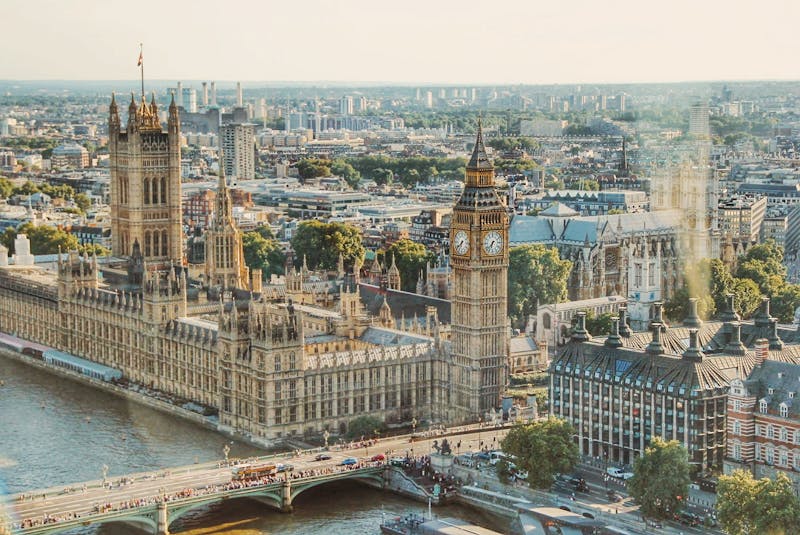
London is, by most measures, the world's greatest city for the international traveler — a metropolis of 9 million people where ancient Roman walls meet contemporary architecture, where the world's finest free museums line the South Bank, and where every culinary tradition on earth has found an extraordinary expression. The city's extraordinary connectivity makes it the single most accessible international destination from North America, with dozens of daily nonstop flights from major U.S. and Canadian cities and competitive last-minute transatlantic fares that appear regularly on key routes.
World-Class Museums and Galleries
London's museum culture is without parallel. The British Museum, the Natural History Museum, the Science Museum, the Victoria and Albert Museum, Tate Modern, and the National Gallery are all free to enter and collectively represent one of the greatest concentrations of human creativity and knowledge anywhere on earth. The British Museum's Great Court, redesigned by Norman Foster with a spectacular steel-and-glass roof, is architecturally one of the finest public spaces in the world. Tate Modern — occupying the converted Bankside Power Station on the South Bank — has transformed its neighborhood and established itself as the world's most-visited modern art museum. For visitors making a spontaneous last-minute trip to London, an entire week could be spent entirely within free cultural institutions without repetition.
Theatre and Entertainment
London's West End is the world's greatest theatre district, offering over 40 major venues staging everything from long-running blockbuster musicals to limited-run productions by the world's finest playwrights and directors. The National Theatre on the South Bank, Shakespeare's Globe, the Barbican, and the Royal Opera House anchor a performing arts ecosystem that attracts global talent year-round. Same-day discount theatre tickets are available from the tkts booth in Leicester Square, making spontaneous world-class theatre attendance genuinely affordable for last-minute travelers. Beyond theatre, London's live music scene — across venues from the O2 Arena to intimate jazz clubs in Soho — operates at a level that few cities can approach.
Neighbourhoods and Dining
London's neighborhoods each carry a distinct personality and reward extended exploration. Shoreditch and Hackney represent the creative, East London energy — gallery spaces, street art, independent coffee shops, and bars that define contemporary urban culture. Notting Hill's Portobello Road Market, the grand Victorian terraces of South Kensington, the medieval lanes of Clerkenwell, and the Georgian perfection of Bloomsbury each tell a different chapter of the city's story. The dining scene has undergone a complete transformation in recent decades: London now hosts more Michelin-starred restaurants than any city outside France and Japan, while its informal dining culture — from Hawksmoor steakhouses to Dishoom's Indian brasseries to Borough Market's artisan food stalls — offers exceptional quality at every price point.
Royal History and Iconic Landmarks
London's royal and historical heritage is uniquely concentrated and accessible. Buckingham Palace, the Changing of the Guard ceremony, the Tower of London (housing the Crown Jewels), Hampton Court Palace, Windsor Castle (easily reached by train), and the Houses of Parliament with Big Ben collectively form a heritage circuit that no other capital can match. Westminster Abbey, where British monarchs have been crowned since 1066, and St. Paul's Cathedral — Christopher Wren's masterpiece rebuilt after the Great Fire of 1666 — both welcome visitors. Hyde Park, Regent's Park, and the winding Thames riverside path provide breathing space across the city's dense urban fabric.
Popular Routes to London
Airlines Flying to London
Best Time to Book Flights to London
Best Months
April – June, September – October
Peak Season
June – August
Budget Season
November – March
Travel Tips for London
Nearest Airport
London Heathrow Airport (LHR)
Transportation
The London Underground (Tube) is the fastest way around the city. The Elizabeth line connects Heathrow to central London in 15 minutes. Buses, black taxis, and Santander Cycles add flexibility.
Weather
Temperate maritime — mild year-round with overcast skies. Summers average 68–75°F; winters are cool (40–50°F) and frequently grey.
Frequently Asked Questions — Flights to London
How long is the flight from New York to London?
Nonstop flights from New York (JFK or EWR) to London Heathrow take approximately 7 hours eastbound. Westbound return flights are slightly longer at 8–9 hours due to prevailing headwinds.
Which airlines fly nonstop from the USA to London?
British Airways, Virgin Atlantic, American Airlines, Delta, and United all operate nonstop transatlantic services to London Heathrow (LHR) from multiple U.S. cities including New York, Los Angeles, Chicago, Boston, Miami, and Washington DC.
Do Americans need a visa to visit London?
No. U.S. citizens do not require a visa to visit the United Kingdom for stays of up to 6 months. A valid U.S. passport is sufficient.
What is the best way to get from Heathrow to central London?
The Elizabeth line (Crossrail) is the fastest and most comfortable option, connecting Heathrow to Paddington in 15 minutes and central London stations in around 30 minutes. The Heathrow Express also runs to Paddington in 15 minutes.
What is the best time to visit London?
April through June offers excellent weather and long days before peak summer crowds arrive. September and October bring warm, golden weather and manageable visitor numbers. Winter offers lower prices and a festive atmosphere from November onward.
Is London expensive?
London is one of the world's most expensive cities. However, its extraordinary collection of free world-class museums, parks, and cultural institutions means exceptional value is available for travelers who plan selectively.
What currency does London use?
London uses the British Pound Sterling (GBP, £). Credit cards are widely accepted everywhere. ATMs are abundant throughout the city.
Is the London Underground easy to use?
Yes. The Tube is straightforward with clear maps and signage throughout. An Oyster card or contactless bank card provides the cheapest per-journey fares and eliminates the need to buy individual tickets.
