.png)
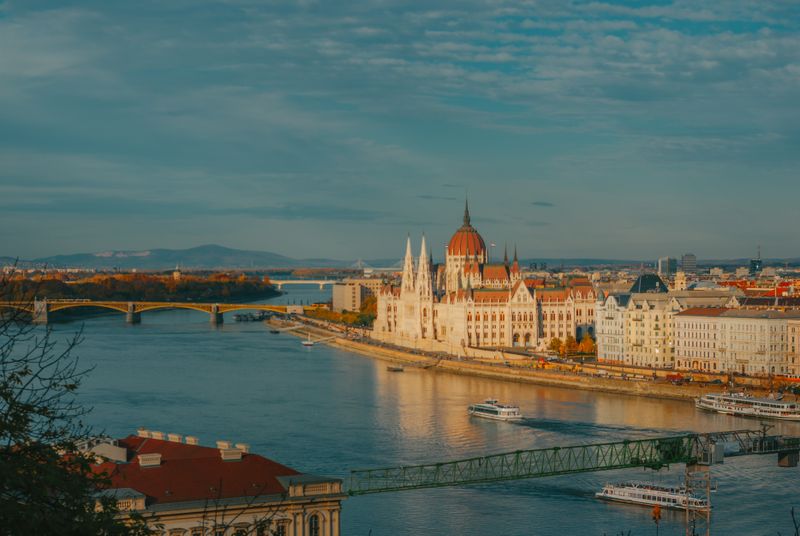
Budapest is one of Europe's most dramatically beautiful cities — a place where the grandeur of its setting, split between the wooded Buda hills and the flat Pest plain by the silver arc of the Danube, matches the extraordinary quality of its architecture, thermal bath culture, and rapidly evolving food and hospitality scene. The city suffered enormously through the 20th century's upheavals, yet emerged with its historic fabric largely intact and a creative energy that makes it one of the most exciting urban destinations in Europe today. For last-minute travelers from North America, Budapest represents one of the continent's finest value propositions: exceptional architecture, world-class thermal spas, outstanding food and wine, and a nightlife culture unlike any other — all at prices significantly below those of Paris, London, or even Prague.
The Parliament and the Danube Panorama
The Hungarian Parliament Building is unambiguously one of the most spectacular buildings in the world. Constructed between 1885 and 1904 in Gothic Revival style, its 268-metre riverside façade dominates the Pest embankment with extraordinary authority. Tours of the interior — including the Dome Hall with the Hungarian Holy Crown, the original coronation sword, and the coronation mantle — are among the most impressive parliamentary visits available anywhere. The view of Parliament from the Buda side of the river, particularly from Fisherman's Bastion or Castle Hill at sunset or after dark when the building is illuminated, is one of Europe's iconic urban panoramas and sufficient reason alone to visit Budapest. Tram 2, running along the Pest Danube embankment between the Parliament and the Great Market Hall, passes this view repeatedly and is widely considered one of the most scenic tram routes in the world.
Thermal Baths
Budapest sits above one of the largest geothermal systems in Europe, and the city has exploited this gift since Roman times. The result is a bath culture — fürdő — that is unique in Europe and represents one of the most distinctive travel experiences on the continent. The Széchenyi Thermal Bath, occupying a Neo-Baroque palace in City Park with 18 indoor and outdoor pools at temperatures ranging from 27°C to 40°C, is the city's most famous and most photogenic. The Gellért Thermal Bath, attached to the grand Art Nouveau Gellért Hotel on the Buda riverfront, is the most architecturally extraordinary. The historic Turkish baths — Rudas and Király — date from the Ottoman occupation of the 16th century and offer a more austere, authentic atmosphere. A morning or evening spent in Budapest's thermal waters is a non-negotiable element of any visit.
Castle Hill and Buda
The Buda side of the Danube is dominated by Castle Hill — a UNESCO World Heritage Site comprising Buda Castle, Matthias Church, and Fisherman's Bastion on its plateau, reached by the historic funicular from the Chain Bridge or by walking the medieval lanes from the Vienna Gate. Buda Castle, once the royal palace of the Hungarian kings, now houses the Budapest History Museum and the Hungarian National Gallery. Matthias Church, with its multicolored Zsolnay ceramic tiled roof, is one of the most visually distinctive church exteriors in Europe. Fisherman's Bastion — a Romantic-style terrace built as a viewing platform in 1902 — provides an unobstructed panorama across the Danube to the Parliament and Pest. The hill's residential streets and courtyards, relatively free of tourist infrastructure, preserve a quiet, atmospheric medieval character that contrasts sharply with the energy of Pest below.
Ruin Bars, Food Markets, and Nightlife
Budapest's ruin bar scene — born in the abandoned courtyards and derelict factories of the former Jewish quarter in the 2000s — has become one of Europe's most distinctive nightlife phenomena. Szimpla Kert, the original and most famous ruin bar, occupies a multi-level, multi-room former residential building in Kazinczy Street, filled with mismatched furniture, quirky art installations, and a layout that manages to feel both chaotic and intimate. The Great Market Hall (Nagycsarnok) — a vast iron-and-brick structure near the Liberty Bridge — is Budapest's finest food market: paprika in every shade from pale gold to deep red, smoked sausages, artisan spirits, handmade embroidery, and vendors who have occupied the same stalls for generations. Budapest's culinary scene has been transformed in the past decade by young Hungarian chefs reinterpreting the country's goulash-and-paprika traditions through a contemporary European lens.
Popular Routes to Budapest
Airlines Flying to Budapest
Best Time to Book Flights to Budapest
Best Months
April – June, September – October
Peak Season
July – August, December
Budget Season
January – March
Travel Tips for Budapest
Nearest Airport
Budapest Ferenc Liszt International Airport (BUD)
Transportation
Three metro lines, an extensive tram network (tram 2 along the Danube is one of Europe's finest), trolleybus, and night buses. City Pass unlocks unlimited transit.
Weather
Continental — hot summers (75–90°F), cold winters (25–38°F). Spring and autumn are the most pleasant seasons with mild temperatures and good visibility.
Frequently Asked Questions — Flights to Budapest
How long is the flight from the USA to Budapest?
There are no nonstop flights from the U.S. to Budapest. Typical connections via London, Frankfurt, Amsterdam, or Warsaw bring total journey times from New York to approximately 12–14 hours, from Chicago 13–15 hours.
Do Americans need a visa for Budapest?
No. Hungary is part of the Schengen Area. U.S. citizens can visit for up to 90 days without a visa. A passport valid for at least 6 months beyond your planned departure is required.
Which thermal bath should I visit in Budapest?
Széchenyi is the most social and photogenic — perfect for a first visit. Gellért is the most architecturally grand. Rudas is the most authentic and intimate Turkish bath experience. All three are excellent.
Is Budapest a budget-friendly destination?
Very much so by Western European standards. Accommodation, dining, thermal bath admission, and transport all cost significantly less than equivalent experiences in Vienna, Prague, or Paris.
How do I get from Budapest Airport to the city center?
Bus 100E is the fastest and cheapest direct connection (30–40 min, €3). The commuter rail (MÁV) to Keleti station takes about 30 minutes. Taxis and Bolt (ride-hail) take 30–50 minutes and cost €15–€25.
What is the best area to stay in Budapest?
The Fifth and Seventh districts on the Pest side place you within walking distance of the Parliament, ruin bars, Great Market Hall, and Danube riverfront. The Buda side is quieter and more residential.
What should I eat in Budapest?
Gulyás (goulash soup), chicken paprikash, lángos (deep-fried dough with toppings), chimney cake (kürtőskalács), dobos torte (layered caramel-chocolate cake), and Tokaji wine from Hungary's great wine region.
Is Budapest good for a long weekend?
Excellent. Three to four days allows you to cover Castle Hill, the Parliament, the Great Market Hall, at least one thermal bath, the ruin bars, and the Jewish Quarter without feeling rushed.
